 Bora Bora Snorkeling
The Best Time to Snorkel in Bora Bora
There is no closed season in the Bora Bora lagoon - boats run all year and the water never drops below bathtub temperature - so the honest answer to the best time to snorkel in Bora Bora is a ranking, not a yes-or-no. May to October wins on rain and clarity, June to September pays for it with crowds, the January-February wet season trades greyer skies for the warmest water of the year, and within any month the morning hours hold the calmest water. This guide puts the months, the temperatures and the wind in one place, then attaches the season to the boats - the Bora Bora snorkel season and price comparison carries the full field.
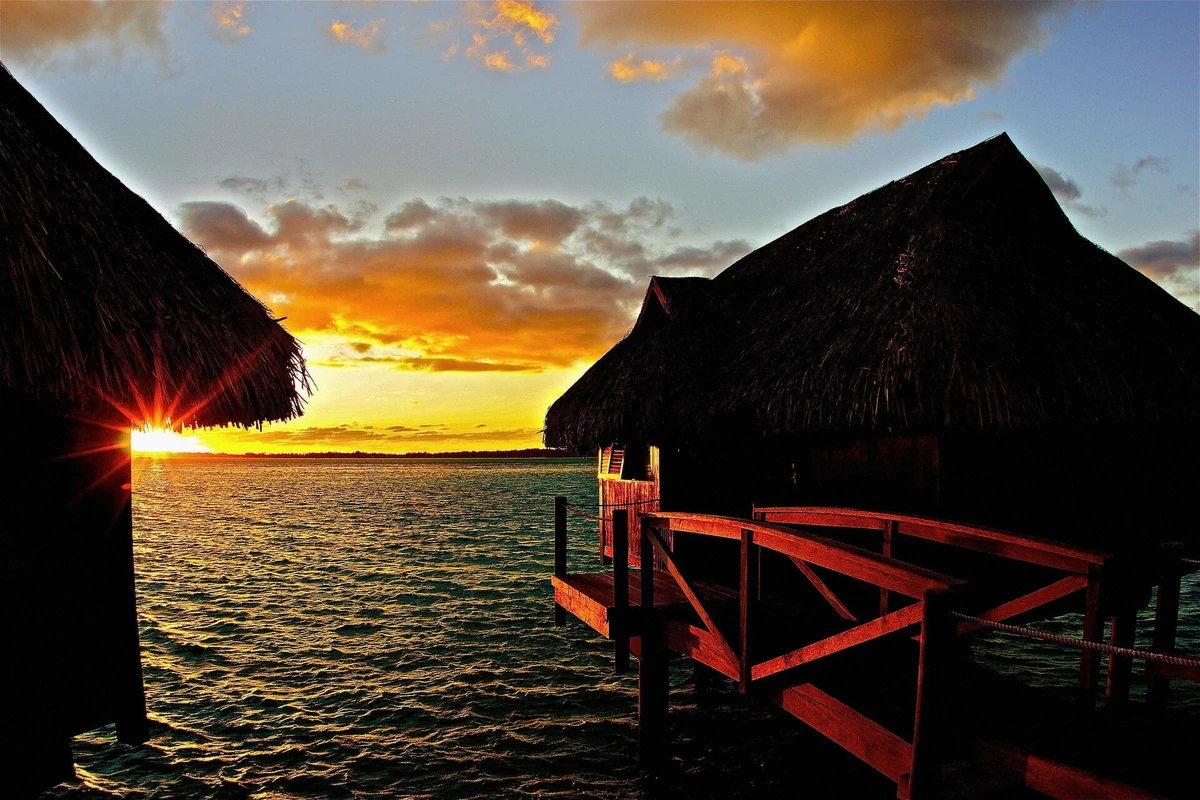
First light on the lagoon - the hour when the water is flattest and the boats are still tied up. Photo: Wikimedia Commons - see notes/commons-attribution.json.
Quick answer The month that wins, the month that saves, and the morning rule that holds all year
The best time to snorkel in Bora Bora is May to October - the drier, trade-wind season with the year's clearest water - and within it June to September carries the fullest schedules and the biggest crowds. Water holds 26-29 °C (79-84 °F) all year, so the wet season (November to April) stays swimmable between showers and costs less. The rule that holds in every month: morning departures run the calmest water, and the two most-reviewed boats report bookings 46 and 81 days ahead in season.
Key takeaways
- Prices move with the calendar: the Bora Bora snorkel tour comparison prices every boat against the same September 2026 week.
- Wet season still works - the shallow-water outrigger is the wet-month boat because its stops sit in the lagoon's most sheltered band.
The Two Seasons, Honestly Named
French Polynesia sits deep in the tropics, and its seasons are about rain and wind, not temperature. The austral winter - May to October - is the dry season: steadier south-easterly trade winds, lower humidity, and the year's best water clarity because less rain runoff stains the lagoon. The austral summer - November to April - is the wet season: hotter air, heavier but shorter showers, lighter winds between the fronts, and a lagoon that warms to its annual maximum.
Neither season closes the boats; the Marine forecast for the Society Islands from Meteo France Polynésie is what actually stops a departure, day by day.
What each season is for
The choice is a preference, not a lottery ticket.
- May to October - clarity first: the driest skies, the trade wind's steady cooling, the fullest tour schedule, the year's biggest crowds on the water
- November to April - value first: warmer water at its 29 °C peak, thinner decks, lower resort rates, and showers that pass in the time it takes to refinish a picnic plate
- Shoulders - April-May and October-November: most of the dry season's clarity with less of the peak's queue, the travel-writer's honest pick
Water Temperature: The Number Your Skin Cares About
The lagoon runs 26-29 °C (79-84 °F) across the year - warm by any ocean standard and warmest in the February-March wet season. The chart most travellers actually need is the monthly one: what the sea does, what the season does, and how booking pressure behaves. Tahiti Tourisme's climate notes carry the official line on the climate; the table below is the snorkeler's read of it.
The year at a glance
Typical lagoon water temperatures and the season's character. Air runs a couple of degrees warmer than the water year-round.
| Months | Water | Season | What it means on a boat |
|---|---|---|---|
| January-March | 28-29 °C / 82-84 °F | Wet | Warmest water, passing showers, thinnest decks |
| April-May | 28-29 °C / 82-84 °F | Shoulder | Clearing skies, dry-season clarity arriving |
| June-September | 26-27 °C / 79-81 °F | Dry / peak | Clearest water, fullest schedules, book far ahead |
| October-November | 26-27 °C / 79-81 °F | Shoulder | Dry-season water, thinning crowds |
| December | 28 °C / 82 °F | Wet begins | Holiday crowds on the water, showers returning |
Does 26 °C need a wetsuit?
No - at 26-29 °C a rash vest is the standard, a shorty is the cold-tolerant option for three-swim days, and full wetsuits are for photographers floating still for an hour. The honest cold risk on a Bora Bora snorkel day is wind chill on the boat between stops, which a dry shirt solves; the packing list carries exactly that.
Wind and the Morning Rule
The lagoon's daily weather has a pattern worth building a week around: the trade wind fills in through the late morning and peaks in the afternoon, which is why morning departures run the calmest water - a rule the guides repeat and the reviews confirm. Morning snorkels get glassier visibility, easier surface swims and the wildlife's first shift; afternoons get warmth, lazier crowds and choppier runs between stops. Rain, in either half, is usually a brief show - the boats run through showers and ground only for wind events at the passes.
Reading a week's forecast like a guide
The marine forecast is the source; the interpretation is simpler than it looks.
- Wind speed is the cancellation number, not rain - boats reroute to the lagoon's lee side long before they stay at the dock
- Swell at the passes matters for the motu landings, not the snorkel stops, which all sit inside the barrier
- A washed-out day is a rebook or a refund on every listing in the comparison - build one spare half-day into the week and the weather risk is zero
Wet-season sky over the lagoon - a passing shower, not a lost day. Photo: Wikimedia Commons - see notes/commons-attribution.json. Illustrative photo: rain cloud over the sea, Madeira.
Crowds: The Season's Real Cost
Bora Bora's underwater traffic peaks with the dry season. The operators' own listings print the pressure: the most-reviewed boats report bookings averaging 46 and 81 days ahead, and the platform review summaries note that popular stops can feel crowded at peak hours. The lagoon is big enough that crowding is a scheduling problem, not a wall of people - the crews time their grounds against the fleet, and the boats with hard caps (8 passengers at Reef Discovery, 7 at H2O) simply sell out earlier.
Beating the queue, season by season
Three levers, in order of effectiveness.
- Book the date early - 46-81 days ahead is the listings' own average in season, and every booking here carries free cancellation to 24 hours
- Book the morning - the first departures reach the manta ground and gardens before the fleet, and the water is calmest anyway
- Shoulder the trip - April-May and October-November deliver near-dry-season water with half-deck density, at shoulder rates
The Wildlife Calendar: What Shows Up When
The lagoon's residents keep no calendar - stingrays, blacktip reef sharks and the coral gardens are year-round - but the visitors do. Humpback whales pass the Society Islands roughly August to November, and the whale-watching boats that work the passes outside the lagoon run in that window; manta sightings at the eastern cleaning station run in pulses all year; and the wet season's warmer water brings the reef's busiest fish activity. Tahiti Tourisme keeps the official line on the whale season; the operator listings carry the rest.
The calendar in one table
What the lagoon offers, month-shaped.
| Months | Animal | Where | How reliable |
|---|---|---|---|
| Year-round | Stingrays, blacktip reef sharks | The sandbars | Near-certain on every ray stop |
| Year-round, in pulses | Manta rays | Eastern cleaning station | Frequent on manta-ground routes, never promised |
| Year-round | Eagle rays | Southern sandy flats | Common on the flats run |
| August-November | Humpback whales | The passes, outside the lagoon | Seasonal - dedicated whale boats |
| Wet season peaks | Reef fish activity | The coral gardens | Warmest water, busiest reefs |
The Trades and the Pass: How Wind Writes the Day
Bora Bora's wind has a name worth knowing: the alize, the south-easterly trade that blows its steadiest through the dry season. The trades are not the lagoon's enemy - they are its ventilation, keeping the air moving and the decks bearable - but they set the daily geography. The barrier reef blocks most of the wind's fetch, so inside the lagoon the water stays swimmable on days the open ocean would close; what the trades decide is which side of the island holds the flat water, and the crews move with them.
The Marine forecast from Meteo France Polynesie publishes the wind in the same chart as the swell, and a traveller who reads it the night before knows which shore the boats will favour before the operator's confirmation message says so.
The wind day, decoded
What the forecast actually changes on a lagoon boat.
- Under 15 knots - everything runs; the lagoon's lee side holds glass
- 15-22 knots - boats reroute to the sheltered side; gardens get choppier, sandbars stay swimmable
- Over 22 knots - groundings begin; the rebook-or-refund policy carries the day
- Rain of any amount - irrelevant; a shower is weather for the deck, not for the water
Clarity by month, as the reviews report it
Visibility is the snorkeler's real season clock. The pattern across the comparison's review record: peak-season mornings collect the glassiest reports - the settled trades rinse the lagoon and the drier weeks leave it clean - while late wet-season weeks after heavy rain read greener in the shallows. The honest range runs from 15-30 metres on a settled day to half that after a big rain.
No month is bad - but the dry season buys the odds.
| Period | Typical visibility | What reviewers report |
|---|---|---|
| June-September | 20-30 m on settled mornings | The year's clearest garden water; capped boats sell out |
| April-May, October | 15-25 m | Near-peak clarity, thinner decks |
| November-February | 10-20 m, variable | Greener after rain; warmest water of the year |
| March | 15-25 m, improving | The wet season clearing out |
Holiday weeks and school breaks
Two calendars stack on the climate: the French school holidays that bring metropolitan families in late October, December-January, February and April, and the northern-hemisphere summer, which fills June-August with American and European travellers. The practical consequence: boats that cap at 7-8 seats sell out furthest ahead in those weeks, and the 46-81 day booking leads the listings report are averages that skew higher inside them. A traveller locked to a holiday week should book the moment flights are fixed; a traveller with shoulder-month freedom gets the same water at shorter notice - and the free-cancellation terms on every listing make the early date reversible either way.
Why Clarity Moves: Rain, Runoff and the Flush
The lagoon's clarity is a plumbing story. The barrier reef blocks the ocean swell, but it also slows the ocean's exchange: inside the lagoon, water moves with the tide through the passes and over the shallow flats, and everything the island sends downhill - a day of rain, a road's worth of dust, the red soil the island is made of - rides the same plumbing. A heavy wet-season shower stains the near-shore water for hours; a settled dry week lets the tide polish the whole lagoon until the gardens read like glass.
That is the mechanism behind the seasons in this guide: the dry season is clearer not because the sun tries harder but because less runoff arrives and more of the water in the lagoon has been out to the pass and back.
The three clocks that set your visibility
Check them in this order the night before a swim.
- The rain clock - how much fell in the last 48 hours; the near-shore shallows clear fastest, the gardens last
- The tide clock - incoming tide brings clean ocean water up the passes; the morning push is the classic garden window
- The wind clock - under the trade threshold, fine; over it, the stirred lagoon takes a day to settle
Booking windows by month, from the listings' own leads
The operators print their booking pressure; the months move it. The table reads the 46-81 day averages against the calendar a planner actually holds.
| Travel month | Book by | Why |
|---|---|---|
| June-August | 3-4 months ahead | Peak demand on capped boats; 81-day leads are the average, not the ceiling |
| September-October | 2-3 months ahead | Peak clarity, easing queues |
| April-May, November | 4-8 weeks | Shoulder schedules; full choice at short notice |
| December-March | 2-6 weeks | Thinnest decks; watch the holiday weeks inside them |
Reading the Season on the Ground: Three Local Cues
Guidebooks argue months; the island argues signs, and three of them read from the water's edge. The swell line at the pass: white water over the reef opening means the trades are up and the boats will run the lee side all day - a flat pass line is the dry-season signature. The morning glass: if the lagoon holds a mirror at seven and ripples by ten, the day is running the classic pattern, and every morning departure this month will beat every afternoon one.
And the boat yard's rhythm: hulls hauled and antifouled in March and April are the island's own announcement that the busy season is coming - the crews prep in the shoulder because the shoulder feeds the peak. Learn those three and the month table stops being a forecast and becomes a checklist you can watch passing.
The shoulder-month campaign
April-May and October-November carry a recurring pattern in the listings' reviews: travellers who aimed for the shoulder and describe peak-season water at shoulder prices. The mechanics are honest - the trades have settled, or not yet restarted; the rain has eased, or not yet arrived; and the fleet runs full schedules without full boats. The trade is air temperature a degree or two either side and a small risk of shoulder-season wind events, which the rebooking policies carry.
For travellers whose calendar has a hinge, the shoulders are the value play this island offers; for travellers locked to school holidays, the booking-window table is the defence.
The Wet Season's Case: Four Reasons February Works
The dry season wins every headline, so the wet season's case deserves its own paragraph - because for some travellers it wins the booking. The water is at its annual warmest, holding near 29 °C from February onward, which turns a three-stop morning into a bath. The decks are at their thinnest: the hard-capped boats sell out months ahead in July and run half-full in February, which means the smallest groups of the year without paying for a private charter.
The island's rates - rooms, restaurants, spa menus - sit at their annual floor. And the rain itself is a rhythm rather than a wall: overnight and early-morning showers dominate the pattern, clearing to hours of swimming light between fronts. The honest cost is greyer skies in the photos and greener near-shore water after the night's rain - both real, neither a dealbreaker for a traveller whose priority is water time over tan lines.
February, in four lines
The wet-season pitch, compressed for the calendar-locked.
- Warmest water of the year - 29 °C across the shoals
- Thinnest decks - capped boats run with seats to spare
- Lowest island rates - rooms and restaurants at the annual floor
- Rhythm rain - overnight fronts, swimming-light mornings
When to Snorkel in Bora Bora: FAQ
When is the best time to snorkel in Bora Bora?
May to October for the year's clearest, driest water, with June-September the fullest and busiest stretch. Shoulders - April-May and October-November - deliver most of the clarity with fewer decks. The morning rule holds all year: first departures run the calmest water.
What is the water temperature in Bora Bora?
26-29 °C (79-84 °F) across the year: coolest in the August-October dry season, warmest at 29 °C in the February-March wet season. A rash vest, not a wetsuit, is the standard answer - the packing guide covers it.
Is Bora Bora good for snorkeling in the wet season?
Yes, with eyes open: the water stays 28-29 °C, the boats run, and the showers pass quickly - the trade is greyer skies between swims and greener water after heavy rain. Wind, not rain, is what actually cancels a boat, and every listing here rebooks or refunds when that happens.
When do manta rays appear in Bora Bora?
Year-round, in pulses: the eastern cleaning station holds resident mantas, and sightings cluster when plankton conditions gather several animals at once. Reef Discovery opens at the ground each morning; H2O sets the stop on the day's conditions.
Do snorkel boats run in January and February?
Yes - the lagoon has no closed season, and the wet-season boats run on thinner decks at lower prices. The realistic caveat is windier days at the fronts; the listings' free-cancellation and rebooking terms cover the washouts, so book the date and trust the refund line.
How far ahead should I book a Bora Bora snorkel tour?
Earlier than instinct suggests: the two most-reviewed listings report bookings averaging 46 and 81 days ahead. Every booking carries free cancellation to 24 hours - several with reserve-now-pay-later - so an early reservation costs nothing but holds the seat.
Matching the Month to the Boat
The season narrows the field more than any review does. Peak-season travellers should book a hard-capped boat early - Reef Discovery's 8-passenger signature run or H2O's 7-seat route - because caps meet peak demand head-on. Wet-season travellers get the flexible play: the outrigger's shallow-water four hours or the family safari rebook cleanly when a front passes.
And when the month is chosen but the boat is not, the the Bora Bora lagoon tours compared by season page finishes the job.